
Happy April, food & foraging friends!
Spring is everything, everywhere, all at once… so much to forage, and then to process and prepare, at a time I want to be savoring every day outdoors before the mosquitoes and 100-degree days descend! It’s also my birthday month, and my name being April Robin, I celebrate with my namesake birds in the garden all month long.
I received so many beautiful gifts and greetings, but one came in the form of a feature article on Chowhound declaring me a “ramp expert.” I would not call myself an expert in anything except spilling my coffee (I recently spilled it all over my cat in bed — that’s real talent), but I’ll take it!
Two wild spring veggies are guaranteed to get you a citation from the online police if you post about harvesting them, ramps being one. It’s true, this slow-growing native allium faces serious ecological pressures, diner demand being a significant driver. Yet we can responsibly enjoy ramps, by harvesting just one leaf per plant and harvesting only a few leaves per clump, while leaving most if not all of the bulbs to continue to propagate.
I recently interviewed Lady Danni Morinich about foraging in Philly for my upcoming book, and she cursed the ramp hunters who denude ramp patches without following these principles, or who harvest them before peak size to maximize their potential. Danni also bemoaned those who gather more than they can eat and end up them – the worst sin of all, in my opinion.
Yesterday morning, NYC forager and cookbook author Marie Viljoen shared a timely “rampsploitation” post focused on the wild-harvested, bulb-on bunches she sees at farmer’s markets. Her advice is to buy ramps from farmers growing their own, and if purchasing, ask questions about their harvesting practices and encourage leaf-only sales. Or better yet, grow your own!
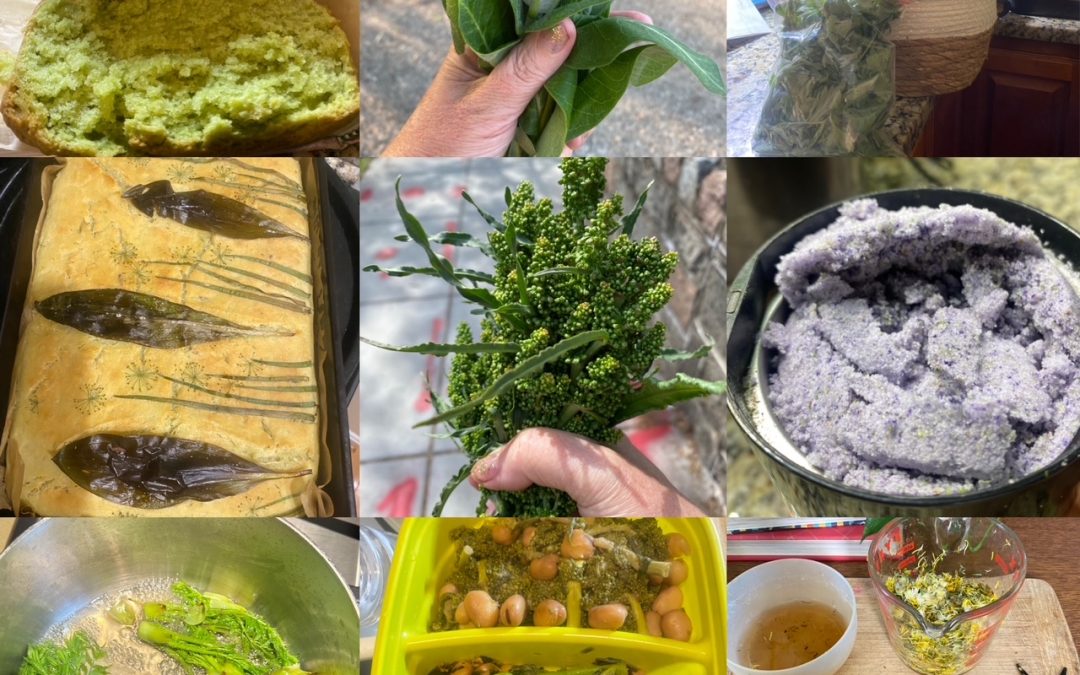
As I shared with the reporter, I prefer the leaves over the bulbs, and don’t think harvesting them is much worth the environmental tradeoff. The leaves lend a deep green color to infused oils, and also dry easily, retaining their complex flavor. This month, I made a ramp focaccia, using a friend’s loose recipe, which involved food-processing ramps, squeezing out the green ramp water, infusing the crushed leaves in oil and then using the leftover plant matter in the dough itself: Nothing wasted! I also used a few ramp leaves to make a landscape scene on top, along with flat chives and dill flowers. The rest of my ramps went into other dishes shared with friends, from a butternut squash soup to fried rice that included other wild edibles like garlic mustard florets and mugwort.
The other wild veggie I see online-shaming around is milkweed. Indeed, I posted a fava bean milkweed dish (another Marie Viljoen banger) I’d made in a local Facebook foraging group this month. I explained that this was common milkweed I planted in my own garden plot, that I spread the season-end seeds all over our community garden every year and that what I harvested was in part to thin competing stalks. This wasn’t sufficient for one commenter, who snubbed my post, saying “best to leave for the butterflies.”
Two things can be true: We should plant milkweed for the monarchs, who rely on its leaves as food and to lay their eggs. But once established, milkweed grows in abundance and can be judiciously harvested without affecting its populations. What I love most about milkweed (for the kitchen) is that all parts are edible and can be enjoyed throughout the season, from young shoots to buds to immature pods to flowers. I will use a few at each stage from my garden, leaving plenty by fall to replenish my patch and spread around to my neighbors as well. (Just be sure to check your milkweed leaves for insect eggs before harvesting! Note too that milkweed should never be eaten raw.)
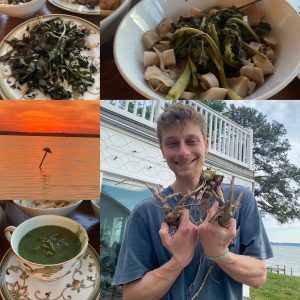
Everything, everywhere, all at once: it me in spring. I’ve got magnolias drying, infusing and pickling for sugar, spice and other things nice. Curly dock buds got sauteed with the Svanetian salt and other spices brought back from Georgia last month for a slightly sour side dish. Mugwort being cleared out of my building’s landscaped beds made a delicious green sweet loaf and salty crackers. Violets were churned into syrup and sugar and vinegar, the varying pHs providing each a different beautiful hue, from pink to blue to purple. A trip to a friend’s garden in Virginia’s Northern Neck yielded sochan (coneflower dragged in kebab spice and oil and grilled til blackened and crispy, a showstopper); nettles and herbs for soup; and evening primrose, which we cooked nose to tail, leaf to root, before deciding the mouthfeel just wasn’t for us. And that’s just to name a few!
I hope you are enjoying spring as much as me and the other April robins!
Wildly yours,
April
***
Image Block 1: Mugwort loaf, young milkweed, Ninjy and mugwort, ramp focaccia, curly dock buds, violet sugar, angelica shoots, milkweed and fava beans, dandelion processing.
Image Block 2: Grilled sochan, primrose roots and leaves, nettle-potato soup and the signature sunset of Sharps, Virginia on the Rappahannock River.
| |