
Happy June, food & foraging friends!
Summer is a time of such abundance that I find myself in a perpetual state of FOMO, never being able to attend every event I stack on my calendar (you can’t swing a cat without hitting a free concert/festival in DC this time of year). The same is true of not having time to execute every wild food idea – which is why I’ve started a foraging bucket list (more on that below)!
This month I’ve discovered some fun new applications for old plant friends I’m excited to share with you, so let’s dive in.
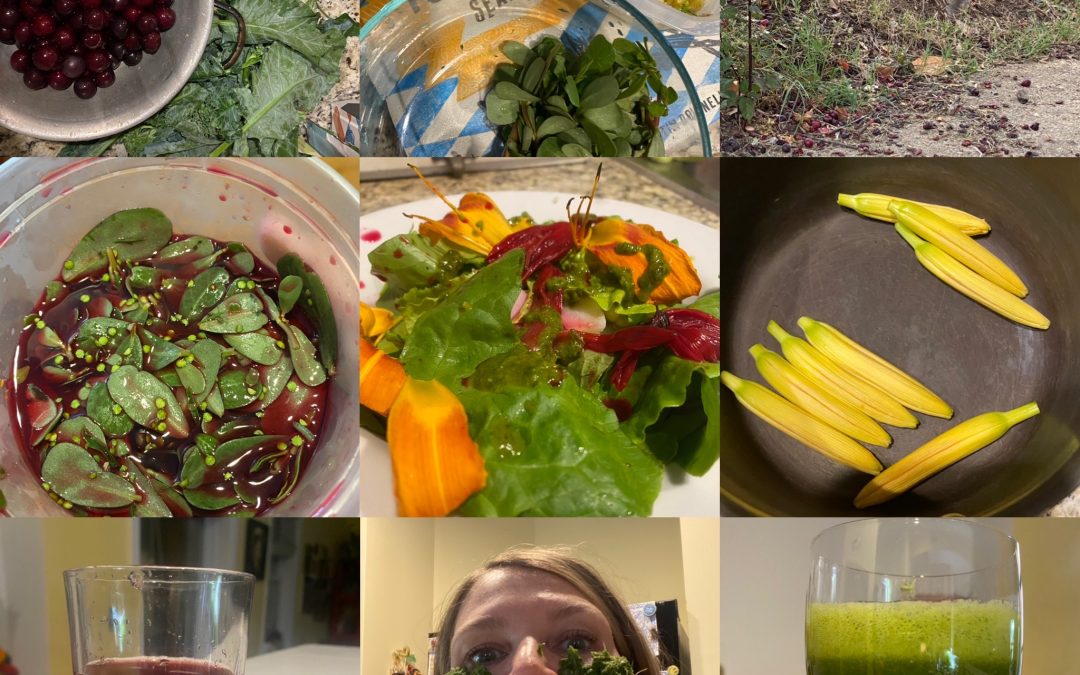
In my upcoming urban foraging book (now officially in production), I discuss various different species of cherry (Prunus genus) trees. But until now, I had never tasted the disparaged fruit of “ornamental” cherries (aka Japanese cherries), bred for flowers over fruit. Yes, they are more pit than flesh, but the flavor is wow! Think chokecherry – bitter and sweet, perfect for a syrup.
I also made a moody purple paint from the berries to add to my growing watercolor palette. I’ll be inviting gardeners to experiment with some of my wild paints at the 15th anniversary of my community garden this month (check out the incredible lavender color my mustard greens made below). Also in the Prunus genus, I’ve been noticing cherry-plums everywhere this month, a fruit not previously on my radar. I competed with a squirrel at a bus stop to gather a ton of them this week, which my chef friend Iulian is going to help me transform into Tkmeli, a Georgian sauce akin to ketchup. Bitter, sour, sweet, savory– what can’t Prunus do?!
I’m also seeing some “plant friends” through a new lens, thanks to Katrina Blair’s book The Wild Wisdom of Weeds. This reference covers 13 common plants spanning the planet, with numerous interesting applications for each. I recently put together a foraging bucket list of species, experiences and methods to try, and added several items from her book: dock lemonade (oxalic acid giving it the sour power), lambsquarters root soap (saponins for the win), purslane shampoo and mallow root milk.
Katrina’s book already prompted me to do a juice of plantain and mallow, which was mild, grassy, frothy and gorgeously green, then use the pulp for a hydrating, anti-inflammatory facial mask. No cost, no waste beauty!
My next “reconsidered” plant is poor man’s pepper or Virginia peppergrass (Lepidium virginicum), a mustard family plant that has taken over my block this month. It’s a cute one, just a few inches tall, with slender leaves and little round seed pods. I’ve used this potent pepper in homemade mustards before, but “forager chef” Alan Bergo has a great video about how this plant’s nasturtium-like flavor quickly mellows when incorporated into other dishes. I gave pepperweed another go blended into an egg salad and added to juicy purslane pickles (another wild summer fave), and discovered a subtler side to what is an aggressive flavor eaten solo.
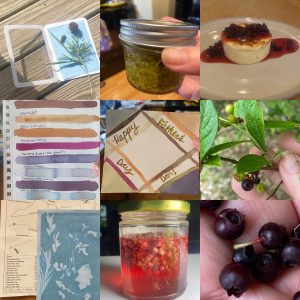
Milkweed, which I wrote about in more depth earlier this year, is one of my MVPs because of its culinary and ecological versatility. Recently I discovered Lakota chef, food activist/educator, author and restauranteur Sean Sherman’s recipe for milkweed capers, and it’s my new favorite thing! Sean’s work on food sovereignty and decolonization has been so influential that I booked a trip to Minneapolis to pay respects to his restaurant Owamni, not realizing that it was closing… in order to open another, Indígena by Owamni, in new nearby digs!
As luck would have it, the soft opening was the night of my arrival and I nabbed a blink-and-you-miss-it reservation – had my flight not been cancelled. (Adding American Airlines to my very long s*** list, along with Amtrak, who’s been doing me dirty this summer too.) I am still traveling there this weekend but decided there was so much to share this month, I would plan to do a bonus “Wild Life” edition post-Minneapolis – stay tuned for that.
More teaser copy in the meantime: I’m hatching a new class at ANXO/Brightwood Pizza that will be a twist on my ongoing Foraging & Cider Tasting series, with a crafty add-on: Participants will get to make a solar print (aka cyanotyping) of wild plants we discover on our walk! Follow me on Eventbrite to get notified when registration opens.
Some other shout-outs: Check out this Juneberry video my friend and author Nevin Martell and I collaborated on this month. Nevin’s cooking and writing is delightful; watch to the end for his surprising take on this delicious native berry. One of the tips I share is that all “crowned” berries are edible. See photos above of another delicious wild crowned berry you can find in our neck of the woods this month: blueberries. On a walk with a friend along Virginia’s Lake Anna, I found three wild queens (see what I did there 👸), including deerberries and two different species of blueberry. (No, you don’t have to trot off to Maine or Alaska to find these antioxidant-rich berries!)
Finally, consider a listen to my podcast chat on summer foraging with chef Maria Liberati, then check out my “Friend for the Long Haul” podcast / video on foraging with chronic illness, part of a virtual summer camp for spoonies (“crip” speak for chronic illness sufferers – it me).
Hope your summer’s starting swimmingly — more from the Twin Cities soon!
Wildly yours,
April
***
Image Block 1:
Summer’s bounty, including foraged cherry-plums (with fellow furry forager, those devilish DC squirrels) and amaranth; poor man’s pepper and pickled purslane for egg salad; daylilies two ways; ornamental cherry soda; and plantain-mallow juice and face mask.
Image Block 2: Cyanotyping and wild watercolors, two of my ongoing foraged art experiments. Milkweed capers and cordial (pink bevvie); Poplar’s serviceberry cheesecake and Lake Anna’s wild blueberries — both edible crowned berries.