
Happy May, food & foraging friends!
I’m addicted to travel for many reasons, including the chance to cheat time. Not only can you arrive somewhere earlier than you departed, thanks to air travel and time zones, you can also cheat time by changing seasons and latitudes. This month, I got to experience a second spring in Stockholm. The heart of this picturesque city is actually a series of islands, easily navigable by public ferry. Stockholm boasts endless acres of green space, including the world’s first national city park. That means, of course, foraging!
Having visited most of the other Scandinavian countries, which share similar cuisines, I came ready with a food checklist: Bulk bin licorice runs (hold the salty stuff for me!). Smørrebrød, open-faced sandwiches stacked with fish, shrimp or roast beef, yummy spreads and pickled veggies. Meatballs, mashed potatoes and lingonberries. And last but not least, anything and everything on the menu with seasonal and foraged delicacies, which in spring means things like white asparagus, wild nettles and ramsons, Europe’s wild garlic cousin to ramps.
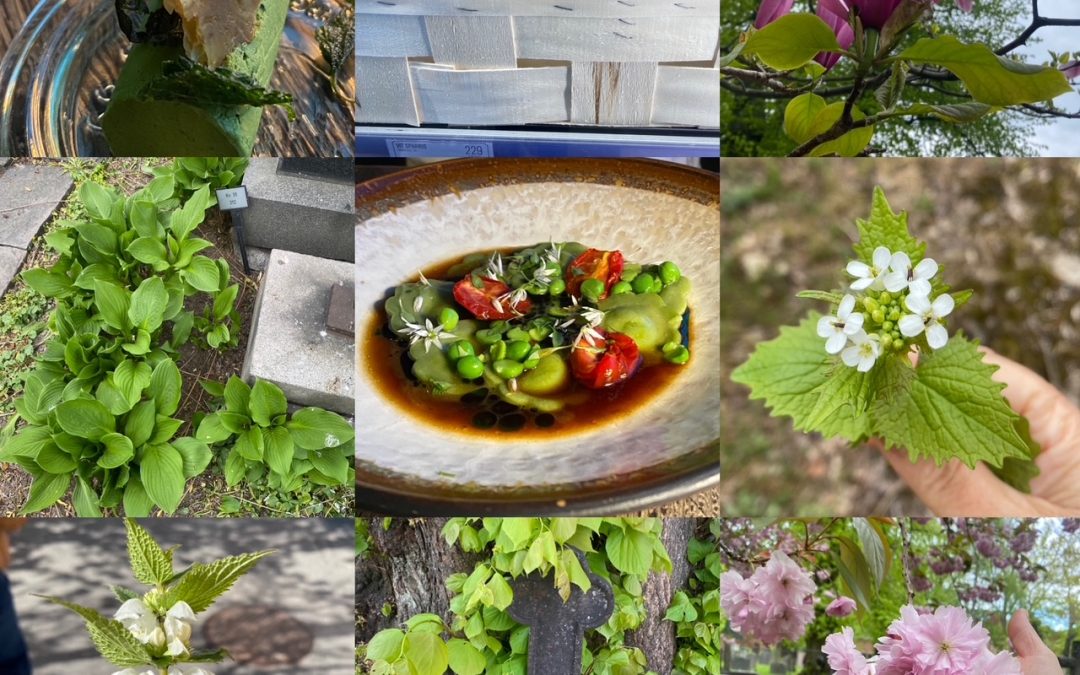
My travel companion and I got lucky to get a last-minute seating at Fotografiska, an international hub of photography that had its start in Stockholm. The museum has a world-class restaurant overlooking the Baltic Sea, with an innovative tasting menu hitting every part of the palate. We opened with milkbread with wild nettle butter and crispy chicken skin, as well as spring brassica shoots with green garlic and pangrattato (crispy breadcrumbs so richly flavored I swore they were bacon bits). Another highlight was ravioli with smoked tomatoes and pork broth topped with wild ramson flowers, a gorgeous flavorful garnish that completed the dish. I also discovered a local sparkling rhubarb wine that was quite possibly the best thing I’ve ever drank.
Back on the city island of Djurgården, home to the Vasa Museum (more on that in a minute), we stumbled onto Galärvarvskyrkogården, a gorgeous cemetery where spring was just awakening. The double-blossomed cherries were in peak pink; tiny, tender linden leaves were just emerging, offering a refreshing cucumber palate cleanser (lindens are all over DC — many parts edible at different stages). I nibbled on spicy saucer magnolia petals and young hosta shoots, an oft overlooked ornamental-cum-vegetable, the seasons of both having already passed us back home. To open the palate, I ate newly-flowering garlic mustard shoots whole, shivering at their peppery bite. And for dessert, some nectar-sweetened flowers of white deadnettle, a close cousin of the purple deadnettle we often find in our city garden beds. I loved that many of the graves had built-in flower beds in front of the tombstones, planted with pretty arrays of flowers (perhaps fed by the decaying matter underneath!)
Back to the Vasa: if “pride before a fall” was a ship, this would be it. Hundreds died aboard this 17th century ship though it toppled and sank just a mile from its maiden voyage departure port, as none of the shipbuilding crew would stand up to King Gustavus Adolphus to say that this biggest ship of its time wasn’t actually seaworthy in design. It took them centuries to find the sunken ship again; once they did, in the 1960s, they managed to bring the entire thing up, skeletons and all, through sheer will and engineering genius, piecing it back together one plank at a time and building a massive, oddly proportioned museum around the ship’s shape.
Much more to say about Sweden and its wonderful wild foods (and those asparagus, fat as sausages — who knew it was so delicious pickled?); you can check out a few more photos from my journey on Instagram!
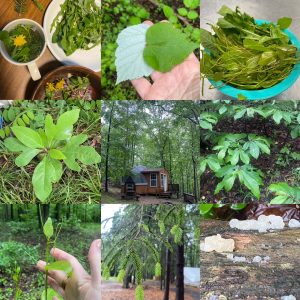
I was excited to stumble on Friends Wilderness Center some months ago while looking for a quiet, nature-centered location in anticipation of my June 1 deadline, and it was the just the place. The land, the hospitality and Quaker-led community here is quite special. The remarkable China Folk House on site became my book-editing HQ. This multi-level farmhouse, saved from an impending dam project in the Yunnan Province, was dismantled, shipped and rebuilt by Sidwell Friends students with the help of the West Virginia Timber Guild (a rather happier parallel to Vasa!)
The steady soaking rain made it easier to stay focused and not get FOMO given the many acres of trails to explore. I managed to log a few trail miles in between editing sessions, wood thrush (DC’s “state” bird!) and myriad other birds singing as I snipped spruce and sassafras for tea and greenbrier tips to throw on my sandwiches.
Though I came here solo, I was rarely alone. I enjoyed hearty meals over rich conversations with a rotating cast of travelers, with trios of frisky cats and dogs roaming about in addition to goats and chicks and ducks, croaking bullfrogs to lull me to sleep and a territorial cardinal to wake me in my geodesic dome.
Wildly yours,
April
***
Image Block 1: Nettle butter, white asparagus, saucer magnolia, hostas, wild garlic flowers on ravioli, garlic mustard, white deadnettle, linden and cherry blossoms among the many wild/local delicacies I snacked on in Sweden’s cemeteries and fine dining establishments!
Image Block 2: Wild edibles on site at the Quaker Wilderness Center, where I finalized my book manuscript this past weekend, including greenbrier and spruce tips, snow fungus, sassafras, wineberry leaves, dandelion and pawpaw.